
Understanding the Basics of the Floristry Trade
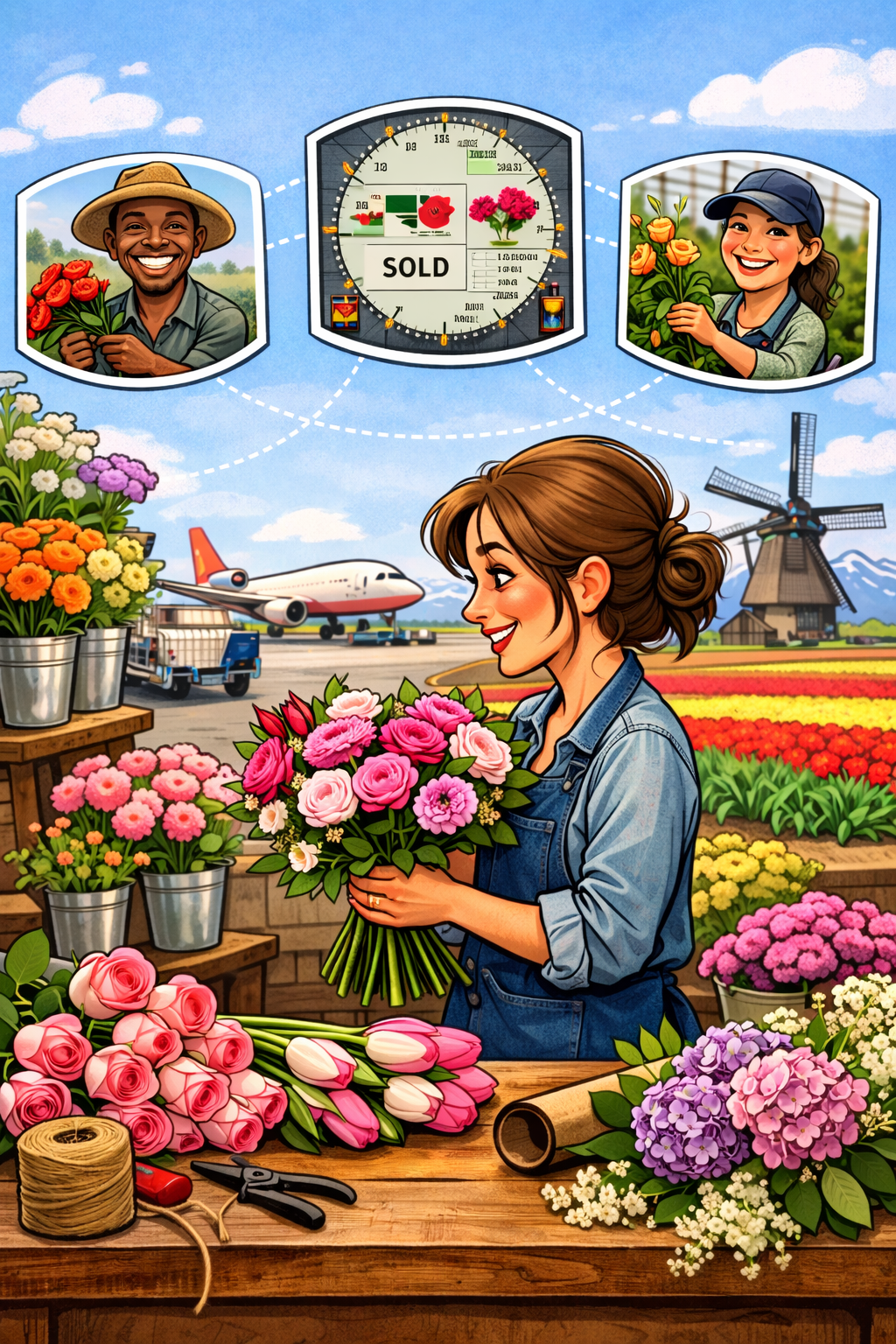
A guide for florists navigating the global flower market
When we walk into a flower shop in the morning and open the boxes that arrived overnight, it’s easy to forget just how extraordinary the journey of those flowers has been.
A rose in your hand may have been cut yesterday morning in Kenya, packed onto a plane that evening, landed in the Netherlands overnight, sold through the Dutch market before sunrise, and delivered to your wholesaler before making its way to your shop the very next day.
Floristry might feel local when we’re designing bouquets for our customers, but the truth is that the flower trade is one of the most sophisticated global supply chains in the world.
Understanding a little about how it works can help florists make better buying decisions, manage costs, and feel more confident navigating the industry.
Where Do Our Flowers Come From?
Flowers are grown all over the world, with different regions specialising in different crops depending on climate, light levels and labour costs.
In Europe, the Netherlands remains the centre of the flower trade, producing tulips, chrysanthemums, gerberas and many seasonal flowers in highly controlled greenhouse environments.
Further afield, countries such as Kenya and Ethiopia grow large volumes of roses, spray roses and summer flowers, while Ecuador and Colombia are known for producing large-headed roses and premium varieties.
Each region plays a role in keeping the global supply of flowers flowing year-round. This is why florists can buy roses in February, peonies in May and beautiful summer flowers even during colder months.
Why the Netherlands Still Leads the Flower Trade
Although flowers are grown worldwide, the Netherlands continues to act as the global hub of floristry.
Every day, millions of stems move through the Dutch flower markets, where growers, importers and wholesalers buy and sell product before it is redistributed across Europe.
This system allows wholesalers to gather flowers from many different countries and offer florists a huge selection from a single supplier.
For florists in Ireland, this means being able to order roses from Kenya, lisianthus from Italy, foliage from Ireland and chrysanthemums from the Netherlands, all in the same delivery.
It’s an incredibly efficient system that keeps flowers moving quickly and ensures they arrive fresh.
Why Flower Prices Change
One thing every florist quickly learns is that flower prices move constantly.
Flowers are a natural product, which means supply can change depending on weather, growing conditions and seasonal cycles.
Prices can also be affected by factors such as energy costs, transport costs and global events that disrupt supply chains.
For example, when energy prices increase in Europe, some greenhouse growers may reduce production during winter because heating costs become too high. When fewer flowers are planted, supply drops a few months later, which can lead to price increases.
This is why florists often see certain flowers suddenly become scarce or significantly more expensive at different times of the year.
The Importance of Seasonality
One of the most valuable things a florist can understand is seasonality.
Working with flowers that are naturally in season often means better quality, stronger stems and better value.
Tulips in spring, peonies in early summer and beautiful autumn textures later in the year all bring their own rhythm to floristry.
Designing with the seasons not only makes economic sense but also keeps floral work feeling fresh and inspiring.
Buying Well as a Florist
Buying flowers is both an art and a skill that develops with experience.
Good buying isn’t just about finding the cheapest product, it’s about understanding quality, variety, stage of bloom and how flowers will perform once they arrive in the shop.
Florists who buy well often think about:
how long flowers will last in the shop
how they will open for customers
how well they combine with other products
and how they fit into the overall design style of the business.
Over time, this understanding becomes one of the most valuable skills a florist can develop.
Floristry Is Both Craft and Industry
At its heart, floristry is a creative profession built around emotion, storytelling and beauty. But behind that creativity sits a complex international industry that works quietly in the background to make those moments possible.
Every bouquet we create is the final step in a journey that began thousands of miles away.
Understanding how the trade works helps florists feel more connected to the industry they are part of, from the growers who cultivate the flowers, to the wholesalers who move them across continents, and finally to the florist who brings them to life.
And that connection is something worth celebrating.
